Roofing Services
Commercial Roofing
TPO, silicone coatings, flat, single-ply and metal systems for Tampa Bay businesses, planned around your operating hours rather than ours.
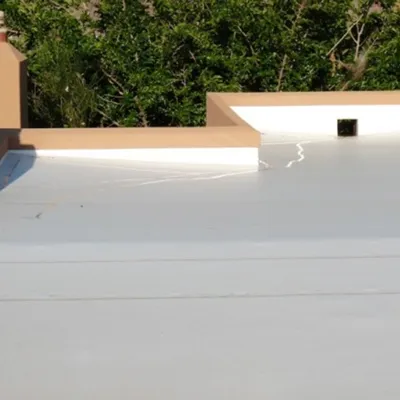
Commercial Roofing Services by Tactical Roofing Company
Flat, low-slope and metal systems built for Florida buildings
A commercial roof fails differently from a house. It is usually flat or low-slope, so water sits on it instead of running off, and the building underneath is somebody's business, so the work has to happen without closing the doors. Both facts change how the job is planned.
Tactical Roofing Company works on commercial buildings across Pasco, Pinellas and Hillsborough counties from our base in Odessa. We install and replace TPO, apply silicone coatings over sound existing roofs, build flat, modified bitumen and built-up systems, install EPDM and PVC single-ply, and install commercial standing seam metal. Family-owned, service-disabled veteran-owned, licensed and insured, Florida License CCC1335934.
We publish our work rather than describe it. Every completed roof in our public records carries its real address, date and materials, 165 of them so far. Most of that published work is residential, so if you want to see commercial references for your building type, ask and we will put them in front of you.
Why a commercial roof is a different job
Commercial roofs are designed differently from residential systems. They cover larger surface areas, support mechanical equipment, and meet stricter building code and safety requirements. Four differences drive everything else on this page.
-
Water sits on it instead of running off
A pitched residential roof sheds water in seconds. A flat or low-slope commercial roof manages it, through slope, drains, scuppers and seams. That is why ponding after heavy rain is a commercial problem and almost never a residential one, and why drainage design decides how long the system lasts.
-
It carries equipment and foot traffic
Commercial roofs support rooftop HVAC units, condenser pads, vents, conduit and the technicians who service them. Every one of those is a penetration through the waterproofing, and every service visit is foot traffic across the membrane. Both are designed for, or both become leaks.
-
The building underneath is open for business
Nobody can pause a warehouse, a medical office, a retail center or a restaurant while a roof is replaced. Access routes, staging, noise and delivery schedules all become part of the roofing plan, not an afterthought once the crew arrives.
-
The surface area and the code requirements are larger
Commercial roofs cover more square footage and meet stricter building code and safety requirements than residential systems. Assemblies are selected to meet the uplift requirements the current Florida Building Code sets for the site, using systems that carry Florida Product Approval.
Commercial roofing systems we install
These six cover almost every commercial building in Tampa Bay, and four of them cover most. The right one depends on the deck, the condition of what is already up there, what the roof has to carry, and how long you intend to hold the building.
- Single-ply membrane
TPO roofing
A single-ply membrane made from polypropylene and ethylene-propylene rubber, available in white or black. TPO resists tears, punctures and UV, holds up to high wind and heavy rain, and reflects heat rather than absorbing it, which keeps the space underneath cooler through a Florida summer. Seams are heat-welded into a continuous watertight layer.
Suits: retail, office and warehouse roofs where a new membrane is going on and reflectivity matters.
- Restoration, no tear-off
Silicone roof coating
A seamless elastomeric barrier applied over a structurally sound existing roof. It seals cracks, seams, penetrations and flashings, stays flexible through thermal movement, and handles ponding water rather than failing under it. Because there is no tear-off there is far less waste to haul away and far less disruption to the business below.
Suits: a roof that has lost its waterproofing but not its structure. If the deck or insulation is gone, we say so.
- Peel and stick, multi-layer
Modified bitumen
Self-adhering rolls that bond to the deck in multiple layers, reinforced with fiberglass membranes for added strength and fire resistance. Strong seams and a straightforward repair path make it a practical choice on smaller low-slope areas and building extensions.
Suits: porticos, extensions, canopy and shed roofs, and low-slope sections attached to a larger building.
- Traditional multi-layer
Built-up roofing (BUR)
Alternating layers of bitumen and reinforcing fabrics built into a thick, redundant waterproofing membrane. BUR has protected commercial flat roofs for over a century, tolerates foot traffic well, and carries fire-resistant qualities that matter on occupied buildings.
Suits: larger commercial roofs with regular maintenance traffic across the surface.
- Single-ply alternatives
EPDM and PVC
EPDM is a synthetic rubber membrane with strong weather resistance and flexibility. PVC is a polyvinyl chloride single-ply with chemical resistance that suits buildings venting kitchen or process exhaust. The two are seamed differently, and it matters: PVC is a thermoplastic and its seams are heat-welded, while EPDM is a cured rubber whose seams are made with splice tape or adhesive. Both can be fully adhered or mechanically fastened depending on the deck.
Suits: buildings with rooftop equipment, HVAC pads or chemical exposure that rules out other membranes.
- Longest-lived option here
Commercial metal roofing
Standing seam and coated panel systems, sealed at every seam and edge, with aluminum or coated steel selected for coastal salt air. Metal is the longest-lived option on this list, and an existing metal roof can be extended further with a silicone coating rather than replaced.
Suits: buildings held long term, and coastal properties where salt air shortens everything else.
Not sure which applies to your building? One call settles it. We also handle drainage and gutter work, which is often what actually fixes a flat roof that keeps ponding.
Our commercial roofing process
Every commercial project follows the same five stages. The point of writing them down is that you can hold us to them, and compare them against whoever else is quoting.
-
1. Inspection and operational survey
Two surveys happen on the first visit, not one. We look at the roof, and we look at how the building runs.
- Roof deck condition, membrane or panel condition, and insulation moisture
- Drainage: slope, drains, scuppers, gutters, and where water actually stands
- Seams, flashing, edge detail and every penetration around rooftop equipment
- Signs of previous storm wear and previous repair work
What we ask about your building
- Building occupancy and which spaces stay in use
- Customer traffic patterns and entrances that must stay clear
- Employee work schedules and quiet periods worth working around
- Delivery and loading areas, and when they are active
- Rooftop equipment locations and who services it
- Parking availability for staging and material drops
- Emergency access requirements that cannot be blocked at any point
-
2. Written assessment, system selection and estimate
You get a visual condition survey in writing, with a recommendation and the reasoning behind it. Where an engineer's sealed design is required, that is a Florida-licensed professional engineer's work and not ours, and we say so rather than guess.
- Repair, coat or replace, with the evidence for the recommendation
- System options compared on service life, disruption and suitability for your deck
- Systems selected to meet the Florida Building Code uplift requirements for the site, with Florida Product Approval
- A detailed written estimate with no line items that appear later
-
3. Phased installation around your operating hours
Commercial work is rarely one uninterrupted job. It is broken into phases so part of the roof is always weather-tight and part of the building is always usable.
- Work sequenced section by section, highest-risk areas first
- Scheduling set around business hours, tenant needs and delivery windows
- Weather-sensitive work timed to favorable conditions, with exposed areas protected
- Clearly marked work zones, controlled roof access, and protection around entrances and exits
- Debris containment, and a clean organized site at the end of every day
-
4. Final inspection, clean-up and walk-through
The job is not finished when the last panel or sheet is down. It is finished when the details have been checked and the site is clear.
- Every seam, flashing, transition and drainage path confirmed sound
- All debris, stray fasteners and materials removed from the property
- A walk-through with the owner, facility manager or property manager
- Project summary, warranty documentation and maintenance recommendations handed over
-
5. Annual inspection and ongoing repair
A commercial roof is a maintained asset, not a finished purchase. A maintenance schedule is what keeps small problems from becoming interior damage.
- Annual inspection, and another after any named storm
- Drains and valleys cleared, sealant and flashing checked at every penetration
- Minor repairs, leak detection, patching and recoats handled before they spread
- Written findings each time, so you have a maintenance record of your own to draw on later
Want the assessment before the sales pitch?
The quote is free, and what you get back in writing is a measured read on whether your building needs a coating or a replacement. Take it to whoever else you are talking to.
Common commercial roof problems, and what we do about them
Flat and low-slope roofs fail in a small number of predictable ways. Here is what each one looks like and what actually resolves it.
-
Ponding and standing water
Water that has not drained within 48 hours of rain is degrading the membrane underneath it and adding load to the deck. The fix is usually drainage rather than roofing: clearing and resizing drains, correcting slope, adding scuppers, then addressing the surface the water has already damaged.
-
Seam separation and membrane splits
Single-ply systems fail at their seams first. Heat-welded seams, correctly fastened edges and an annual look at every transition catch separation while it is still a patch. A split found in January is a repair; the same split found in August is a ceiling.
-
Leaks around rooftop HVAC and penetrations
Every unit, curb, vent and conduit run is a hole in the waterproofing. Penetrations are where commercial roofs leak most often, and they are the detail other trades disturb most. Flashing and sealant at each penetration get checked every inspection, and after anyone else has been on the roof.
-
Blocked drains and debris build-up
Drains, valleys and gutters silt up with leaves, gravel and packaging. Blocked drainage converts an ordinary Florida downpour into standing water and uplift risk at the edges. Clearing them is cheap next to what a blocked drain causes, and it is routinely skipped.
-
Wind uplift and edge failure
Flat roofs fail from the perimeter inward. Edge metal, terminations and fastening pattern decide whether a storm lifts a corner and peels the field. Edge metal and fastening are matched to the uplift requirements for the site, and the detail is checked before storm season rather than after.
-
Heat and UV degradation
Sustained Florida sun hardens and chalks a membrane until it loses flexibility and cracks at every point of movement. Reflective surfaces and coatings slow this down. On a roof that has already lost its surface but kept its structure, a silicone coating restores the barrier without a tear-off.
-
Saturated insulation under an intact surface
A roof can look fine from above while the insulation below it holds water from an old leak. This is what turns a repair into a replacement, because coating over wet insulation traps the problem instead of solving it. It is found by inspection and core verification, not by looking at the surface.
-
Storm damage that is not obvious from the ground
Lifted seams, displaced flashing and localized punctures rarely show from the parking lot. After a named storm, the roof gets inspected and the condition gets documented, which is the record that matters later for both warranty and insurance questions.
Planning the work around your business
No two commercial properties operate the same way. A warehouse has different priorities from a medical office, a retail center, an apartment complex, a manufacturing facility or a school. Understanding how the property functions is what lets the roofing project be planned around your business rather than the other way around.
Scheduling in phases
Rather than treating the roof as one uninterrupted job, work is completed in planned sections: highest-risk areas first, scheduling set around business hours and tenant needs, and weather-sensitive work timed to favorable conditions. Part of the roof stays weather-tight throughout.
Communication that removes the uncertainty
Most of the stress in a commercial project comes from not knowing what happens next. You get project timelines, daily work schedules, weather-related adjustments, which areas are being worked on, safety precautions and milestones, so owners, facility managers, employees and tenants can all plan around it.
Safety above an occupied building
Work happens above spaces people are using. That means clearly marked work zones, controlled access to roof areas, protection around entrances and exits, debris containment, coordination with property management, and fall protection for anyone working near the edge.
Florida weather, planned for explicitly
Weather here changes fast, especially through hurricane season and summer afternoons. Conditions are monitored so critical work is scheduled appropriately, exposed areas are protected, and schedules adjust before a storm rather than during one. An afternoon downpour over an open tear-off is the failure that actually costs a business money.
Protecting what is inside
Planning covers customer access, employee parking, equipment protection, inventory safety, interior workspaces and sensitive operations. The job site stays clean and organized from start to finish, because a commercial roof project is judged as much on the parking lot as on the roof.
Who is responsible, owner or tenant
Responsibility for commercial roof repair and replacement is governed by your lease, not by us. What we provide is the scope, the photographs and the written condition survey, formatted so an owner, a property manager and a tenant can all read the same document and take it to their own advisers.
Annual inspections and the records they produce
What an annual inspection checks
Compromised seams or membrane damage, cracked sealant around penetrations, damaged flashing, drainage problems and any sign of moisture intrusion. In many cases a commercial leak starts long before anything is visible inside the building, which is the entire argument for looking once a year instead of waiting for a ceiling stain.
Why the paperwork matters later
Many commercial roofing systems carry warranties that require documented maintenance. A written annual inspection record shows the roof was cared for, and after storm damage those same records are what an owner has to work with when insurance questions come up. We provide the findings in writing. What you do with them is yours to decide.
Storm readiness before the season
A roof that already has weak seams, clogged drains, loose flashing or aging materials is the one that fails in a storm. Pre-season checks cover drainage systems, flashing and edge details, the membrane or surface, the areas around equipment and penetrations, and any sign of previous storm wear.
Budgeting without surprises
An annual inspection gives you a clear read on roof condition and remaining service expectations, so preventative maintenance, minor repairs, larger restoration and eventual replacement can be planned into a budget instead of arriving as an emergency.
Commercial roof maintenance a property manager can act on
Most of what protects a commercial roof costs nothing but attention. Eight things worth putting on a calendar.
- 1 Inspect annually, and again after every named storm.
- 2 Clear drains, scuppers, valleys and gutters before storm season, not after the first flood.
- 3 Walk the roof after any other trade has been on it. HVAC service is a frequent source of new penetration damage.
- 4 Check flashing and sealant at every curb, vent and conduit run at least once a year.
- 5 Look for standing water 48 hours after heavy rain and mark where it sits.
- 6 Keep the surface clear of stored material, packaging and equipment that was never meant to live on a roof.
- 7 Keep written inspection records. They are what warranty and insurance questions rely on later.
- 8 Call about a small leak the week it appears. Interior damage costs more than the roof repair that would have prevented it.
Why Tactical Roofing Company
-
Licensed, and the number is on the page
Florida Certified Roofing Contractor license CCC1335934, the certification that qualifies the roofing company, not the sister construction entity. Florida Statute 489.119(5)(b) requires that number in a contractor's advertising, and you can verify it yourself at myfloridalicense.com.
-
Local to Pasco, not dispatched into it
Based at 11634 Pyramid Dr Ste B, Odessa, FL. We work Pasco, Pinellas and Hillsborough counties, which means we know the wind zones, the inspectors and how a Tampa Bay summer actually behaves.
-
Family-owned and service-disabled veteran-owned
The same ownership that answers for the work signs off on it. That is the whole reason the process above is written down rather than improvised per job.
-
We publish the work instead of describing it
Every completed roof in our public records carries its real address, date and materials, 165 of them so far. Most of it is residential work, and we would rather say that than let a number imply something it does not. Ask for commercial references and you will get them.
-
Honest about what a roof needs
If a coating will do, we say so. If the deck or the insulation is gone, we say that too, even though the smaller job is the easier sale. The assessment is written down so you can take it to anyone else for a second opinion.
Commercial roofing questions, answered
The questions building owners actually ask us, answered specifically enough to be useful before you call anyone.
What roofing systems work on a flat or low-slope commercial roof in Florida?
Four systems cover most Florida commercial buildings. TPO is a single-ply membrane that resists tears, punctures and UV, and reflects heat rather than absorbing it. Silicone coating is applied over a structurally sound existing roof and restores waterproofing without a tear-off. Modified and built-up flat systems suit rooftops, porticos and extensions. Standing seam metal suits buildings held for the long term. The right choice depends on the deck, the existing roof's condition and how long you intend to hold the building.
Can a commercial roof be recoated instead of replaced?
Often, yes. A silicone roof coating works when the existing roof is structurally sound but has lost its waterproofing. It goes over the current surface, so there is no tear-off, far less waste to haul away and far less disruption to the business underneath. It does not fix a failing deck or saturated insulation, which is why the decision rests on the condition of the deck and insulation, not the age of the roof alone.
How often should a commercial roof be inspected in Florida?
Annually, and again after any named storm. Florida commercial roofs face sustained UV, heavy summer rain, wind uplift and long humidity cycles, and flat roofs hold water in ways pitched roofs do not. An annual inspection catches ponding, seam separation, failed flashing and blocked drainage while they are still repairs rather than replacements, and it produces the documentation insurers and warranty providers ask for later.
Will a commercial roof replacement shut down my business?
It should not. Commercial work is planned around the building's operating hours rather than the crew's convenience: phased sections so part of the roof is always weather-tight, staging and access routed away from customer entrances, and scheduling set around your busiest periods. Florida weather is planned for explicitly, because an afternoon storm during an open tear-off is the failure that actually costs a business money.
Should a storm-damaged commercial roof be repaired or replaced?
That depends on whether the damage is to the surface or to the structure beneath it. Lifted seams, displaced flashing and localized punctures are usually repairs. Saturated insulation, deck damage or wind uplift across a large area usually is not. The distinction matters for an insurance claim too, which is why it is worth documenting the damage before work begins.
What license should a commercial roofing contractor in Florida hold?
Roofing work in Florida requires a state roofing certification or registration, and Florida Statute 489.119(5)(b) requires that number to appear in the contractor's advertising. Tactical Roofing Company holds Florida Certified Roofing Contractor license CCC1335934. Ask for the number, then verify it yourself at myfloridalicense.com. A contractor whose license number is missing from their own advertising is the first thing worth questioning.
Do you work on commercial buildings outside Tampa?
Yes. Tactical Roofing Company is based in Odessa and works across Pasco, Pinellas and Hillsborough counties, including Tampa, Trinity, Odessa, Palm Harbor, New Port Richey, Clearwater, Holiday and St. Petersburg. Every completed roof we publish carries its real address and date, so you can check the work near your building rather than take our word for it.
More on commercial roofing
- Commercial roofing solutions: what business owners need to know
- Why annual commercial roof inspections matter for Tampa Bay businesses
- How commercial roofing projects are planned to minimize operational downtime
You can also see every roof we have completed on the map, or read about our work in Tampa, Pasco County and Pinellas County.
Need a commercial roof looked at?
Free measured quote, emailed to you, on whether you are looking at a coating or a replacement. Florida License CCC1335934.