How Much Does Roof Replacement Cost in Tampa Bay, Florida? (2026)
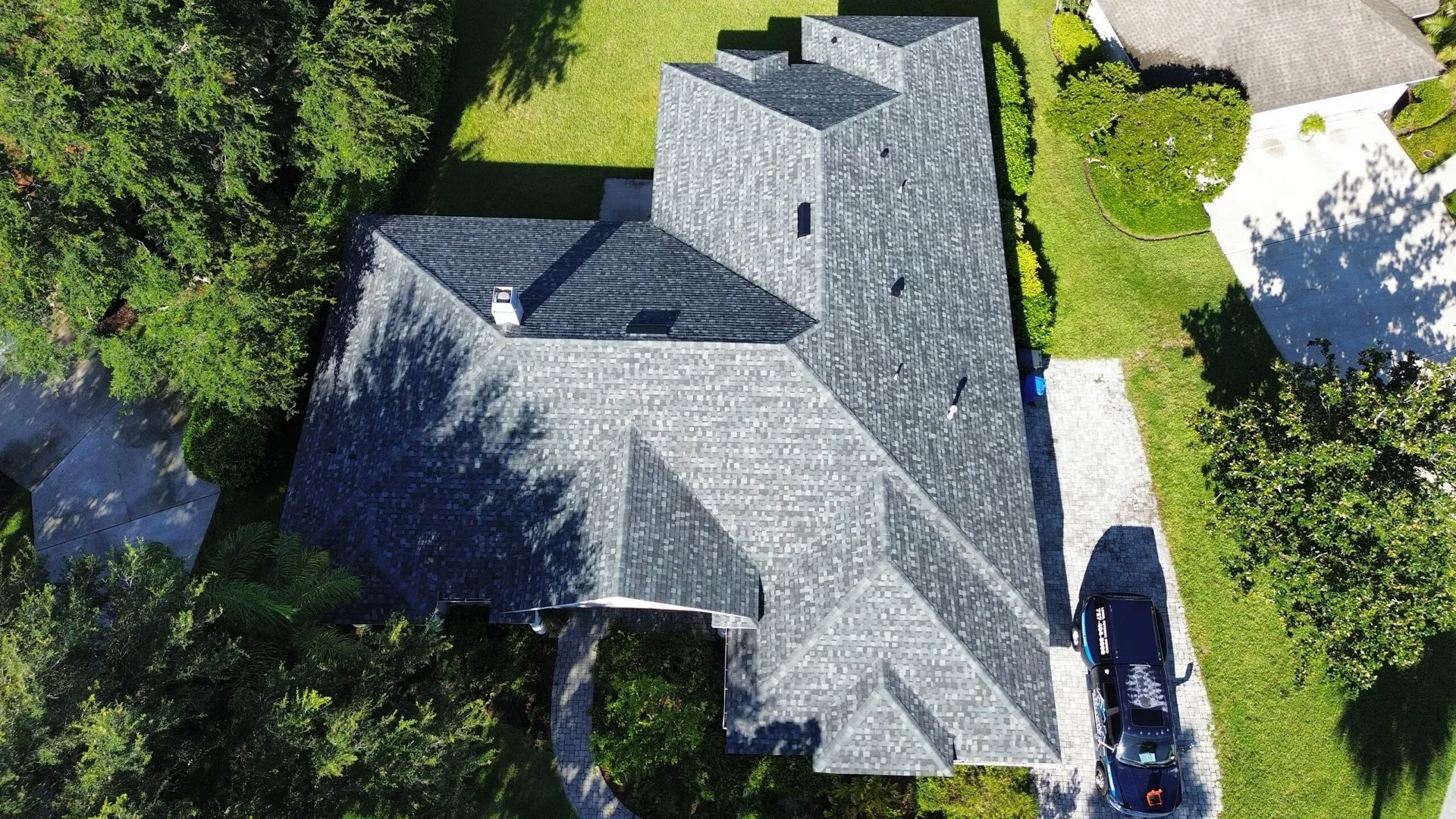
Real 2026 price ranges for Tampa Bay homeowners, and the Florida rules that change what you actually pay.
By Adam Boudreaux, Owner, Tactical Roofing Company · Updated September 2026
We price shingle roof replacements in packages, one installed price per square: Good $375, Better $450, Best $550, current as of September 2026. On a typical one-story 2,000 square foot home that works out to about $9,400 to $13,800. Metal, tile, and flat roofs are quoted separately. Your exact number depends on roof size in squares, pitch, decking condition, and material.
That is the short answer. The rest of this guide shows you where those numbers come from, how to estimate your own roof before anyone climbs a ladder, and the Florida insurance and building code rules that can move your real cost by thousands in either direction. We have completed 168 roofs across the Tampa Bay area; what follows is the walkthrough we give homeowners who ask what to expect.
Key Takeaways
- Our shingle packages run $375 to $550 per square installed (Good $375, Better $450, Best $550), so a typical one-story 2,000 square foot home is about $9,400 to $13,800 (prices current as of September 2026).
- Roofers price by the square (100 square feet of roof surface), not your home's floor area. A 2,000 square foot house usually carries 22 to 30 squares of roof.
- Florida law changes the math: the 25 percent rule now lets many post-2007 roofs be repaired instead of replaced, insurers cannot refuse to write or renew on roof age alone before 15 years, and insurers must file wind mitigation discounts that a new code-compliant roof typically helps unlock.
- An aging roof spends your money while you wait, as carriers reprice and restrict options the closer it gets to the 15-year line. Weigh that against the replacement price.
- Quotes thousands of dollars apart are usually pricing different scopes, not different profit margins. This guide shows you the lines to compare.
On this page: Cost ranges by material · How roofers price a roof · The Florida rules that change the cost · What permits cost · Why quotes differ · Cost per year by material · Repair vs. replacement · FAQs
How much does roof replacement cost?
Here is our shingle pricing as of September 2026, next to typical Tampa Bay market ranges for metal, tile, and flat roofs. Every figure is a range on purpose. Any roofer who gives you a firm number without measuring your roof and assessing your deck and attic is guessing.
| Material | Installed cost per sq ft | Typical 2,000 sq ft home | Expected life in Florida |
|---|---|---|---|
| Asphalt shingle (architectural), our packages | $3.75 to $5.50 | $9,400 to $13,800 | 15 to 20 years |
| Metal, exposed fastener | $8.00 to $14.00 | $18,000 to $30,000 | 40+ years |
| Metal, standing seam | $11.00 to $17.00 | $22,000 to $35,000 | 40 to 60 years |
| Concrete or clay tile | $11.00 to $21.00 | $25,000 to $45,000 | 50 to 100 years |
| Flat sections (TPO, modified bitumen) | $4.00 to $10.00 | depends on flat-section size; use the per sq ft range | ~20 years |
The shingle row is our own package pricing. The metal, tile, and flat rows are typical Tampa Bay market ranges, not our quote; call us for a quote on those roofs.
By home size, for architectural shingle:
| Home size (one story, typical pitch) | Good to Best, shingle |
|---|---|
| 1,500 sq ft | $7,100 to $10,300 |
| 2,000 sq ft | $9,400 to $13,800 |
| 2,500 sq ft | $11,700 to $17,200 |
| 3,000 sq ft | $14,100 to $20,600 |
A two-story home of the same floor area has a smaller roof, so it lands lower. A steeper or cut-up roof lands higher. Our roof cost calculator measures yours from your address.
Two notes on those tables. First, Florida lifespans are shorter than the numbers printed on shingle wrappers. Our sun and humidity age asphalt faster, which is why we quote 15 to 20 years for shingle here rather than the longer figures on the packaging. Second, national cost calculators tend to average in states without our wind code. Florida roofs carry code requirements (sealed or taped decking, enhanced nailing, drip edge) that set a floor under the price. A quote that seems far below these ranges is usually missing scope, and we will show you exactly which lines to check later in this guide.
How roofers actually price your roof
Your roof is not priced by your home's square footage. It is priced in squares: one square is 100 square feet of roof surface. This one piece of vocabulary lets you sanity-check any quote you receive.
A roof is bigger than the floor plan under it. Pitch adds surface area, and overhangs extend past your walls. For a typical Tampa Bay single-story home, roof area works out to roughly 1.1 to 1.5 times the floor area depending on pitch and overhang. So a 2,000 square foot house usually carries roughly 22 to 30 squares of roof.
You can estimate your own squares in five minutes:
1. Take your home's footprint (ground-floor area, not total living area for two-story homes). 2. Multiply by 1.18 for a low-pitch roof, 1.25 for an average pitch, or 1.39 for a steep one. 3. That result is your approximate roof square footage. Divide by 100 to get squares, the unit roofers quote in.
From there, a roofing price is built like this:
Total = roof squares × your package's price per square + permit + any plywood beyond what your package includes + custom items like skylights
Pitch and layout change how many squares your roof has, not the package price per square. A steep roof with valleys and dormers covers more squares than a simple gable over the same floor, and skylights and other custom items are quoted separately.
Run the formula with your own numbers and compare the result to the tables above. If it lands outside the typical bands, it usually means your roof is smaller, larger, steeper, or more complex than the average those tables assume, and that gap is exactly what you should ask each bidder to explain. Remember too that the multiplication is only the base of the formula: the code items, the permit, and the decking allowance are separate addends, and they are part of why a real quote sits above a bare material-times-area estimate.
The one line no estimator can know in advance is decking. The plywood under your shingles can look fine from the attic and still be rotten in spots that only show up at tear-off. An honest quote handles this with a stated allowance: a per-sheet price for replacing bad plywood, written into the contract before work starts. Ask every bidder the same question: "What is your price per sheet of decking replacement, and how many sheets are included?" A roofer who will not put that number in writing before tear-off is a roofer whose final invoice you cannot predict.
What makes the price go up or down
- Pitch and height. Steeper and taller means slower, riskier work and more setup. Same house, same shingle, different labor bill.
- Complexity. Valleys, hips, dormers, chimneys, and skylights all add cut waste and flashing labor. A simple rectangle is the least expensive shape in roofing.
- Material grade. "Architectural shingle" spans a wide quality band, and metal panel gauges and coatings vary. Make sure quotes name the exact product line.
- Tear-off findings. Decking, fascia, and truss repairs surface after removal. This is the allowance conversation above.
- Access. Tight lots, pool cages, pavers, and landscaping that must be protected slow a crew down.
- Home age. Houses that predate Florida's modern building code can trigger required extras at reroof time: deck renailing, a secondary water barrier, and in some cases roof-to-wall connection upgrades; that last retrofit specifically is capped by code at 15 percent of the reroof cost.
- Time of year. Summer storm season keeps every crew in Tampa Bay busy. Late fall through spring often books easier, and a roof that fails in July competes with every other emergency in the county.
The Florida rules that change what you actually pay
This is where real money moves. Florida rewrote big parts of its roofing and insurance law between 2021 and 2023, and a lot of what you read online is older than the rules. Everything below is current as of August 2026, with the statute cited so you or your insurance agent can check it directly. To be clear about our lane: we are roofers, not insurance advisers. We can tell you what the statutes say; decisions about your policy and any claim belong with you and your carrier.
The 25 percent rule changed in 2022
Florida's building code used to require that when more than 25 percent of a roof was repaired or replaced within a year, the whole roof had to be brought to current code. That rule pushed many repairable roofs into full replacement. Senate Bill 4-D changed it: under Section 553.844(5), Florida Statutes, if your roof was built, repaired, or replaced in compliance with the 2007 Florida Building Code or any later edition, only the portion being worked on has to meet current code, no matter how large it is.
In plain terms: if your roof went on in roughly the last 15 to 18 years and a storm damages a section of it, you may legally be able to repair that section instead of buying a whole roof. Roofs older than the 2007 code era do not get this protection. It can be the difference between a section repair, which typically runs $450 to $2,800 in the Tampa Bay market, and a full replacement.
Insurers cannot refuse to write or renew on roof age alone before 15 years
Under Section 627.7011(5), Florida Statutes, an insurer may not refuse to write or renew a homeowners policy solely because of your roof's age if the roof is less than 15 years old. Once the roof passes 15, you have a defined path: an inspection by an authorized inspector showing at least 5 years of remaining useful life blocks an age-only refusal.
If your carrier has raised your roof's age, that inspection option exists in the statute; your agent can tell you whether it applies to your policy. One scope note: the protection is against refusal based solely on age. An insurer can still decline or non-renew over the roof's actual condition or other lawful underwriting reasons, which is how most Florida roof non-renewals actually happen.
Your policy pays in stages, and hurricane deductibles are percentages
Two policy mechanics surprise homeowners at claim time, so it is worth knowing they exist. First, under Section 627.7011(3), claims under replacement-cost policies are initially paid at actual cash value, with the balance of replacement cost paid as the work is performed. Second, under Section 627.701(3)(a), Florida hurricane deductibles are offered at $500, 2 percent, 5 percent, or 10 percent of your dwelling coverage, with exceptions for higher-value homes. On a $400,000 dwelling limit, a 2 percent hurricane deductible is $8,000 out of pocket before coverage pays. What that means for your situation is a conversation for your carrier or agent, not your roofer.
There is one more provision worth asking your agent about: law and ordinance coverage under Section 627.7011(1) and (2), which covers the cost of code upgrades when repairs trigger current-code requirements. Florida policies include 25 percent of your dwelling limit for this by default unless it was refused in writing, and a 50 percent option exists.
Some Florida policies also carry a separate roof deductible under Section 627.701(10): up to the lesser of 2 percent of your dwelling coverage or half the cost to replace the roof, in exchange for a premium credit. It does not apply to hurricane losses, tree strikes that puncture the deck, total losses, or repairs of less than half the roof, and you can reject it by signing a form. Your declarations page will show whether you have one.
One change from the 2022 reforms is worth knowing when you talk to contractors: for policies issued on or after January 1, 2023, Florida law makes post-loss assignment of benefits agreements void (Section 627.7152(13)). A roofer who offers to take over your insurance claim through an AOB is working from an outdated playbook. A good contractor documents the damage and writes the scope; the claim stays yours.
Wind mitigation credits: the discount a new roof can unlock
Section 627.0629, Florida Statutes requires insurers to file actuarially reasonable discounts or credits for construction features that reduce windstorm losses. A new roof built to current Florida code typically checks several of those boxes at once: sealed roof deck, improved roof-to-wall attachment, current nailing schedules. The credits are documented through a uniform wind mitigation inspection after the work. Two scope notes from the state's own consumer notice: the discounts apply only to the hurricane-wind portion of your premium, and they are not calculated cumulatively (OIR notice of premium discounts).
The size of the credit varies by carrier and by home, so we will not quote you a percentage. The straight answer: ask your agent what a post-reroof wind mitigation inspection would do to your premium before you decide on material and timing. For many Tampa Bay homeowners the answer materially changes the effective cost of the roof.
The state may pay up to $10,000 toward hardening your roof
The My Safe Florida Home program has, in recent funding cycles, matched $2 in state money for every $1 a homeowner spends on qualifying wind mitigation improvements, up to $10,000, with low-income homeowners eligible for grants without a match. Roof-related work is at the center of it: roof-to-wall connection reinforcement, roof deck attachment, and secondary water barriers.
A few eligibility realities before you plan around it. The grant funds the wind mitigation components of the job, not the roof covering itself. Since July 1, 2025 the program prioritizes applicants by income group, and its current program update states that higher income households are not eligible for grants at this time. The home must be owner-occupied and homesteaded, with an insured value of $700,000 or less, and its original construction permit must have been applied for before January 1, 2008. The program also requires its own state-arranged wind mitigation inspection before anything else, and its published guidance says starting work before written grant approval disqualifies the project, so confirm the current rules with the program before scheduling anything. Funding comes in legislative cycles and runs out, so check the official site for current status.
What a permit costs in Pasco, Hillsborough, Pinellas, and Tampa
Every reroof in Tampa Bay is permitted and inspected, and the fees are smaller than most articles claim. The local schedules now use flat trade fees, not percentage-of-project formulas, and these numbers come from the published government fee schedules as of August 2026:
- Pasco County: a $45 base fee plus $40 for a residential reroof with wind mitigation, plus small surcharges, roughly $90 to $115 all-in under the fee resolution effective July 1, 2026.
- Hillsborough County (unincorporated): a flat $250 residential roofing trade fee.
- City of Tampa: $177 for a residential roofing permit, plus the state's 2.5 percent building permit surcharge.
- Pinellas County: publishes its fee lines only inside the county budget portal, so confirm the current number there or ask your contractor to show the line item.
Plan on a few business days of processing before work can start. County fee schedules do change (Pasco's current resolution took effect July 2026), so treat these as the published figures as of August 2026; the number that actually matters is the permit line on your written quote. Your contractor pulls the permit, and the fee shows up as that line. Treat a quote with no permit line as a red flag, because unpermitted roof work can surface at sale time and in insurance underwriting.
The cost nobody puts on a quote: what waiting spends
A roof quote prices the roof. It does not price the waiting.
An aging shingle roof in Florida spends your money three ways while you decide. Carriers increasingly restrict options and reprice as a shingle roof ages toward the 15-year line. Fewer carriers competing for a home with an old roof makes shopping your policy harder. And deferred small repairs compound, because a small flashing repair this year becomes a decking-and-insulation job after two more rainy seasons.
None of that shows up on a replacement quote, but all of it belongs in the decision. When we say a roof "costs" $9,400 to $13,800, the real comparison is against what the current roof is quietly costing per year to keep. Sometimes the answer is genuinely "keep it, repair it, revisit in three years." Sometimes the premium and insurability math says the replacement pays for part of itself. Run both numbers with your agent before deciding from the sticker price alone.
Why two quotes for the same roof can be thousands apart
When two quotes for the same roof come in thousands of dollars apart, the gap is almost never pure margin. The quotes are pricing different jobs. Compare these lines one by one:
- Decking allowance. How many sheets of plywood replacement are included, and what is the per-sheet price after that? An excluded allowance is a lowball waiting to become a change order.
- Underlayment class. Peel-and-stick across the whole deck versus synthetic felt is a real cost and performance difference, and Florida's sealed-deck requirements can be met more than one way.
- The exact product. Manufacturer and line, not just "architectural shingles." Warranty terms ride on this.
- Workmanship warranty. Who stands behind the labor, for how many years, and is it written?
- Disposal, dumpster, and site protection. Tear-off debris, magnet sweeps for nails, protection for pool cages and pavers.
- Permit and inspections. Present on the quote, pulled by the contractor.
- Payment schedule. Florida contractors asking for large sums up front, before material delivery, are asking you to carry their risk.
- Quote validity. Material prices move; how long the number holds belongs in writing.
- The wind mitigation inspection. Who orders and files it after the job, you or the contractor?
Ask every bidder for the same scope in writing, then compare. The point is not to find the lowest number. It is to make the numbers comparable, because an incomplete scope is the most expensive thing you can buy.
Cost per year: the math that makes material choice simple
Sticker price is the wrong number to compare materials with. Divide by the years of service you can realistically expect in Florida, and the picture changes. Using the 2,000 square foot ranges above and Florida-realistic lifespans:
| Material | Installed range (2,000 sq ft) | Realistic FL life | Cost per year of service |
|---|---|---|---|
| Architectural shingle (our packages) | $9,400 to $13,800 | 15 to 20 years | roughly $470 to $920 |
| Standing seam metal | $22,000 to $35,000 | 40 to 60 years | roughly $370 to $875 |
| Concrete/clay tile | $25,000 to $45,000 | 50 to 100 years | roughly $250 to $900 |
Assumptions stated plainly: each per-year range divides the dated installed ranges earlier in this guide by lifespan estimates for our climate, not warranty numbers. The tile band blends two materials: its low end assumes clay's century-scale lifespan, its high end concrete's shorter one. Your roof's pitch, your home's structure (tile is heavy and not every structure carries it without engineering), and your resale timeline all move this math.
The takeaways: shingle wins on upfront cost and remains the right call for many homeowners, especially with a shorter ownership horizon. Standing seam costs well above shingle upfront (compare the rows above), and spread over its lifespan it typically costs less per year of service, on top of the wind rating and the insurance conversation above.
Tile is a design and longevity decision more than a budget one. If you plan to be in the house 10+ years, price metal before you default to shingle. If you plan to sell within 5, a quality shingle roof usually serves the sale just as well.
When a repair beats a replacement
We sell roof replacements, so read this section knowing that.
Typical roof repairs in the Tampa Bay area run $450 to $2,800. A repair is usually the right call when the damage is localized (a lifted flashing, a puncture, a few wind-thrown shingles), the decking underneath is sound, and the roof has honest years left. Thanks to the 25 percent rule change covered above, post-2007-code roofs have more legal room to be repaired section-by-section than most homeowners realize.
Replacement earns its price when leaks are recurring across different spots, shingles are shedding granules across the whole field, the roof is inside a few years of the 15-year insurance line, or repair quotes start stacking up annually. If you are weighing the two, send us the address and we will measure the roof and tell you where it stands.
Financing a roof without the pressure pitch
Most people do not have five figures parked for a roof, and a roof rarely fails on a convenient schedule. Financing through a home improvement lender turns the number into a fixed monthly payment and lets you fix the problem when it is small instead of after the ceiling stain spreads. We offer financing options through our site. Terms depend on credit approval, and the lender's disclosure shows the real total cost of any financed offer, not just the monthly number; we will walk through it with you. If paying cash and phasing the work (repair now, replace in two years) pencils out better for you, we will tell you that too.
What it costs with us
We are a local roofing contractor based in Odessa, and we have completed 168 roofs across the Tampa Bay area, with more than 120 Google reviews you can read for yourself.
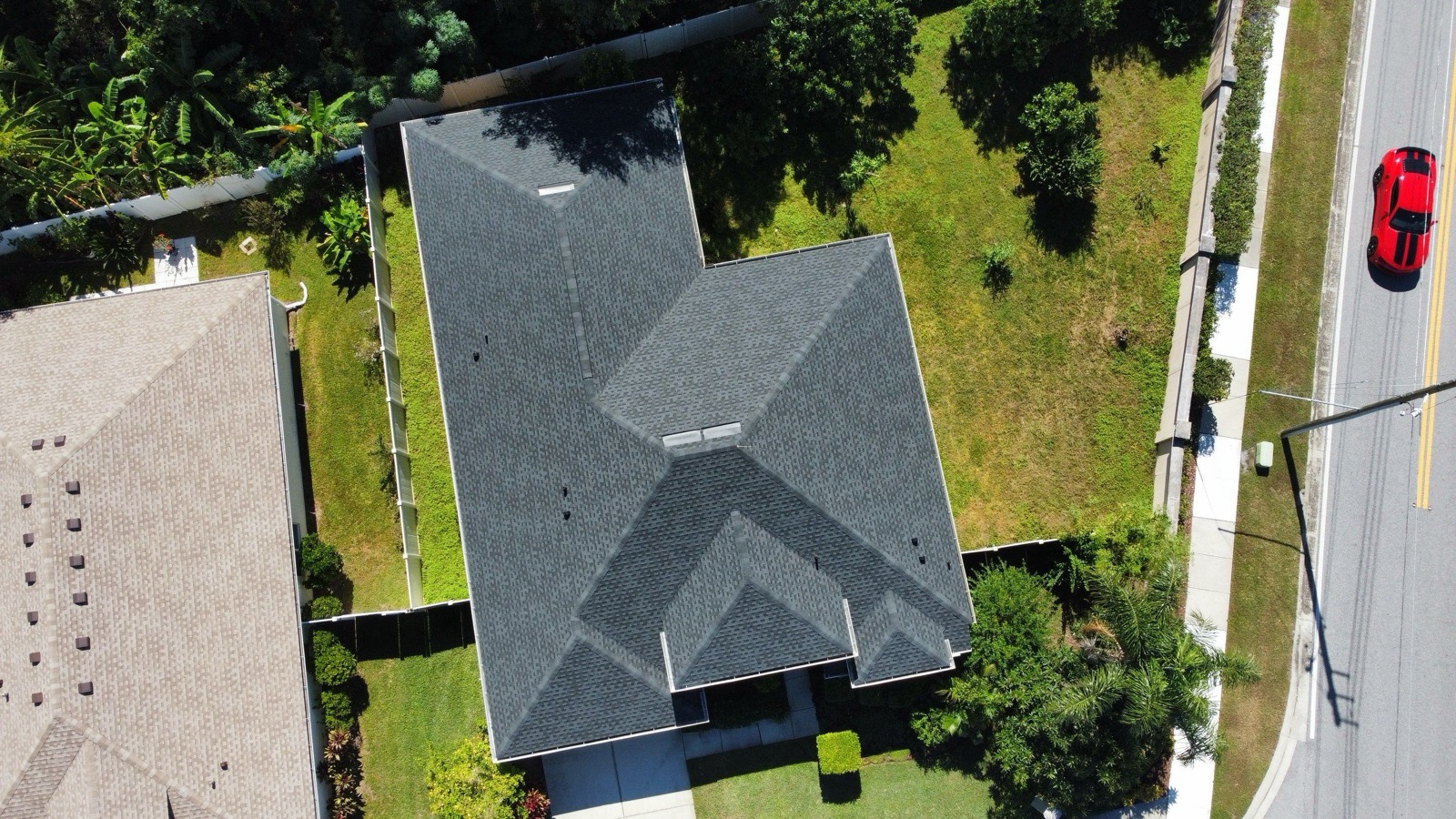
A real number needs your roof measured, not a guess from the street. Here is what you can have today, free:
- A written quote at no charge. Send the address, we measure the roof from aerial data, and the scope and price come back by email, usually the same day or the next business day.
- A straight answer on shingle, metal, or tile for your specific house, including “it is not time yet” when that is the truth.
- A written workmanship warranty on every replacement: 1 year on Good, 10 years on Better, and lifetime on Best.
Call us at (727) 404-8989 or request your free written quote. You will get a written scope built to be compared line by line against the checklist in this article.
Frequently asked questions
How much does it cost to replace a roof on a 2,000 square foot house in Florida?
For architectural shingle, our installed price on a one-story 2,000 square foot home is about $9,400 to $13,800, at $375 to $550 per square as of September 2026. That is at a medium pitch (25 squares); a steeper roof has more squares. Metal and tile are quoted separately. Plywood beyond what your package includes can add to the total.
How much does a metal roof cost?
In our market, exposed-fastener metal typically runs $8 to $14 per square foot installed and standing seam $11 to $17, so roughly $18,000 to $35,000 for a typical home. Details and product options are on our metal roofing page.
Does homeowners insurance pay for roof replacement?
Sometimes, when a covered peril like wind damages the roof; wear and age-related deterioration are typically excluded, and your policy language controls. Replacement-cost policies pay in stages (actual cash value first) and hurricane deductibles are usually a percentage of your dwelling coverage. What your specific policy covers is a question for your carrier or agent.
How long does a roof replacement take?
Most single-family shingle replacements in our area are one to three days on the roof once material is delivered, with permit processing adding a few business days up front. Tile and standing seam take longer.
What time of year is best to replace a roof in Florida?
Prices do not swing dramatically by season, but late fall through spring books easier because summer storm season concentrates demand. The more expensive timing mistake is waiting for a leak to force an emergency decision during the busiest months.
Shingle prices in this article are our own package prices as of September 2026. Metal, tile, and flat ranges reflect the Tampa Bay market as of August 2026 and are drawn from published local cost data. Statute references were verified against the Florida Statutes as of August 2026, and the links let you read them directly. Your roof's real number comes from measuring it, not from an article, ours included.